Climate experts must become media creators. Here’s why.
Research meetings outside the COPs produce findings that matter to billions of people. Yet little of it reaches the public, or even policymakers, with the urgency it needs. A recent air quality conference in Bangkok shows the gap, and why the people doing the work are best placed to close it.
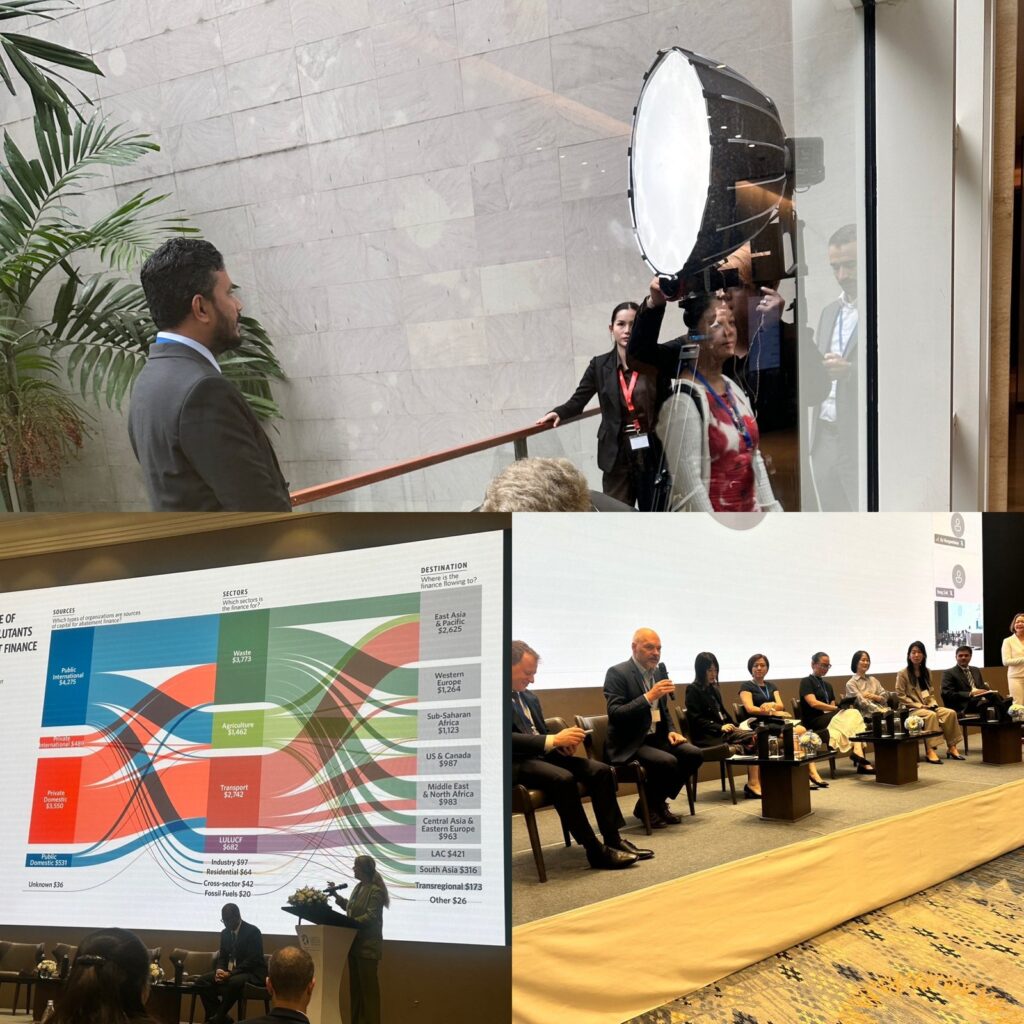
The images above are from a recent climate and air quality meet, Climate and Clean Air Coalition, in Bangkok. It’s an example of one of the many research meetings that happen every year outside the headline-grabbing COPs and Climate Weeks.
Representatives from many countries, research organisations, funders and multilateral agencies attended. A lot of technical information was presented and discussed, much of it directly relevant to the 99% of the world’s population who breathe air that exceeds WHO’s air quality guidelines, according to WHO data from 2022.
But how much of findings and action points actually make it to a general audience?
Even with governments, policy makers and funders, how much of the messaging lands and with the urgency required? Meanwhile, warming and climate disasters are getting worse.
As a climate scientist of several decades explained to me, when the Climate and Clean Air Coalition was set up in 2012, there was a five-year window it set for action on super pollutants, but 14 years later action is still to pick up pace.
During the three days of the conference, and in the three days after it ended, there was little press coverage or discussion on social media. Yet it produced plenty of takeaways for climate action: for governments, capital market investors and communities.
Communication is not an add-on to research any longer. It is how findings turn into action.
NextClimate Media was started on the premise that in this crowded, fast-moving media landscape, nobody can tell your story better than you: the researchers and people doing climate action, and nobody will tell it as often as it needs telling.
What Microsoft did just weeks earlier is instructive. In internal memos, chief executive Satya Nadella and president Brad Smith said the employees and executives closest to the work will have a bigger role in telling the company’s story. “In many ways, the people closest to the work have the best opportunity to shape how Microsoft is understood,” Nadella wrote.
Media tools have become wonderfully accessible. Creators have shown how to use them well, and legacy press is trying to catch up. The time has come for climate experts to become media creators.
That is what our video-first training is for: equipping researchers and their teams to tell their own stories, regularly and well.